Move or Extend? Why More London Homeowners Are Choosing to Improve Instead
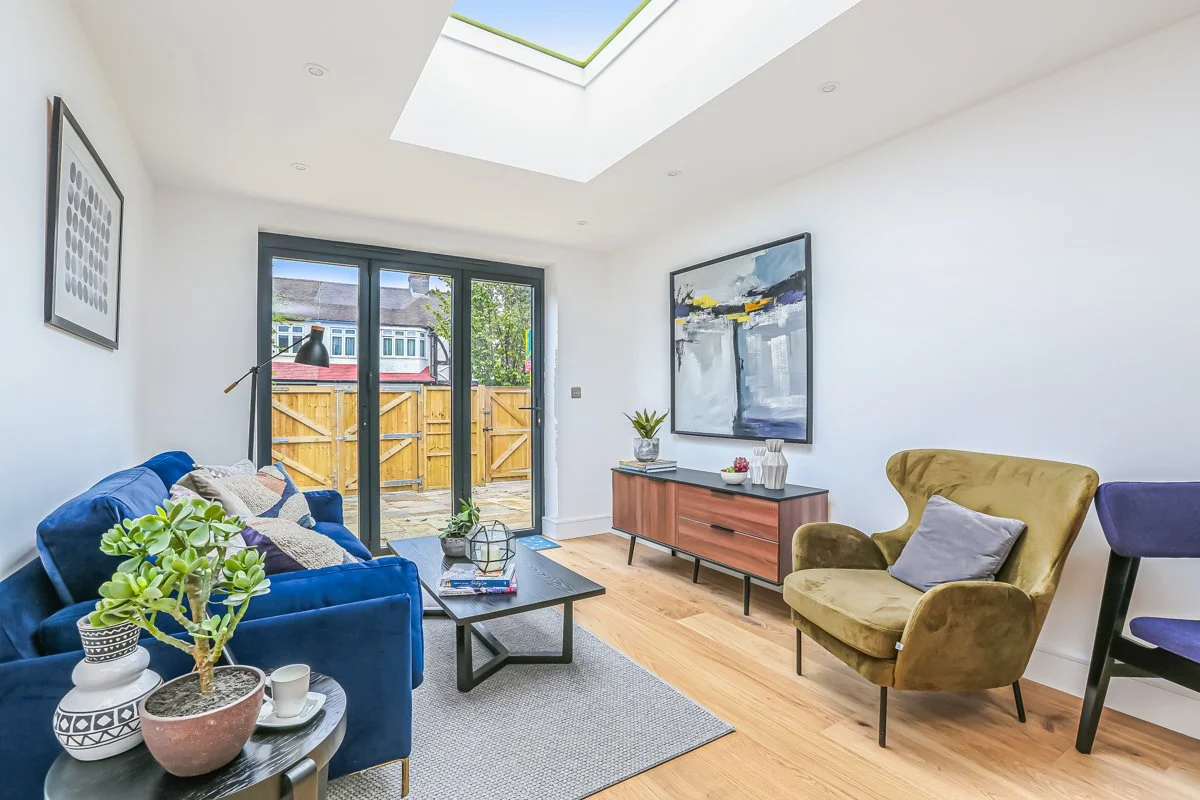
A rear extension designed to create brighter, more functional living space for modern family life.
Last year, we explored the question many London homeowners face in our blog: Loft Conversion vs Moving House — Which Is Best for You?
Fast forward to today, and that question feels even more relevant.
The economic climate has shifted significantly over the past 12 months. Mortgage uncertainty, rising household costs and continued volatility around energy prices are making many homeowners think twice before taking on the cost and stress of moving house.
At the same time, properties are often taking longer to sell, with buyers becoming more cautious and competition across the market increasing. As a result, more homeowners are reconsidering whether moving is actually the smartest option right now.
Instead of spending significant money on stamp duty, estate agent fees, legal costs and removals, many are choosing to invest in the home they already own, by unlocking unused loft space, extending kitchens and rethinking layouts to better suit modern family life.
So, as an update to our previous blog, we’re taking another look at why more London homeowners are choosing to stay put and improve instead.
The Hidden Cost of Moving House
Moving house has always involved more than simply buying a new property. But the financial reality of moving today can be surprising.
Before even thinking about renovations in your next home, there are several major costs to consider:
stamp duty,
estate agent fees,
legal costs and conveyancing,
survey costs,
mortgage arrangement fees,
removal costs.
For London homeowners, stamp duty alone can run into tens of thousands of pounds, depending on the value of the property you purchase.
When you factor in the other costs of buying and selling, many families find they are spending a significant amount of money just to relocate.
That’s before considering the cost of making improvements to the new property. For some homeowners, the question quickly becomes:
Would that money be better spent improving the home we already own?
Selling a Home Can Take Months
Another factor homeowners often underestimate is how long it takes to move house.
Even when a buyer is found quickly, the full process of selling, buying and completing can take several months. Property chains, mortgage approvals and legal checks all add time to the process.
For many households, the journey from listing their home to moving day can take six months or more. During that time, plans can fall through, buyers can withdraw, and chains can collapse. For families who need more space quickly, that uncertainty can be stressful.
Extending a property, on the other hand, allows homeowners to stay where they are while transforming the way their home works.
Rising Living Costs Are Changing Housing Decisions
The wider economic climate is also influencing how homeowners think about moving. Energy prices have become increasingly volatile due to global geopolitical tensions, particularly in oil-producing regions. These disruptions can directly affect household energy bills in the UK.
At the same time, interest rates have risen significantly compared with the ultra-low borrowing costs of recent years. This has increased mortgage repayments for many households and made borrowing more expensive. For homeowners considering a move, these factors can create uncertainty.
A new property often means:
a larger mortgage,
higher monthly repayments,
increased household bills.
In this environment, many families are choosing to invest in the property they already own rather than taking on additional financial risk.
The Alternative: Unlock the Value in Your Current Home
Instead of moving, many homeowners are discovering the potential already sitting within their existing property. Extensions and loft conversions allow homeowners to create the extra space they need without the stress and expense of moving.
Common projects include:
Loft conversions that add an extra bedroom and bathroom.
Rear extensions that create large kitchen-dining spaces.
Side return extensions that transform narrow kitchens.
Double-storey extensions that add multiple rooms.
These improvements don’t just create more space; they also increase the overall appeal and functionality of the property.
Why London Homes Have So Much Untapped Potential
Many homes across London were built decades ago, often with layouts that don’t match modern living.
Victorian and Edwardian houses were designed around separate rooms and smaller kitchens. 1930s houses often have generous loft spaces that were never intended for living accommodation. As a result, many properties contain valuable unused space.
Lofts, side returns and rear gardens often provide the opportunity to create significant additional living space. With thoughtful design and high-quality construction, these areas can be transformed into modern, light-filled living environments.
For many homeowners, this means they are effectively sitting on a hidden gold mine of potential space.
How Much Value Can an Extension Add?
Adding additional square footage to a home is one of the most reliable ways to increase property value.
In many cases, well-designed extensions and loft conversions can increase a property's value by 10–25%, particularly in cities like London, where space is highly desirable.
Projects that tend to add the most value include:
Loft conversions
Loft conversions are one of the most popular home improvements in London. By transforming unused attic space into a bedroom or home office, homeowners can significantly increase the value and functionality of their property.
Rear extensions
Large open-plan kitchen-dining spaces are highly attractive to modern buyers. Rear extensions that create these spaces can dramatically change how a home feels and functions.
Double-storey extensions
Double-storey extensions are often cost-effective because they add significant space while sharing the same foundations and roof structure.
These types of improvements can transform a property while protecting its long-term value.
Don’t Move; Improve
Moving house will always be the right choice for some families. But in today’s economic climate, with rising living costs, mortgage uncertainty, and slower-moving chains, many homeowners are discovering that extending their homes can be the smarter option.
Instead of paying stamp duty and moving costs, that same investment can be used to:
create more living space,
improve the layout of the home,
increase property value,
future-proof the property for growing families.
For many London homeowners, the space they need is already there; it just hasn’t been unlocked yet.
Thinking About Extending Your Home?
At Livspace Lofts & Extensions, we help homeowners across London transform their homes through high-quality design and construction.
Our team specialises in:
garden rooms.
If you’re considering moving because you need more space, it may be worth exploring whether an extension could achieve the same result.
Get in touch with Livspace today to discuss your project.