Nicky’s 7 Top Tips for Planning a Loft Conversion for Hotter Summers
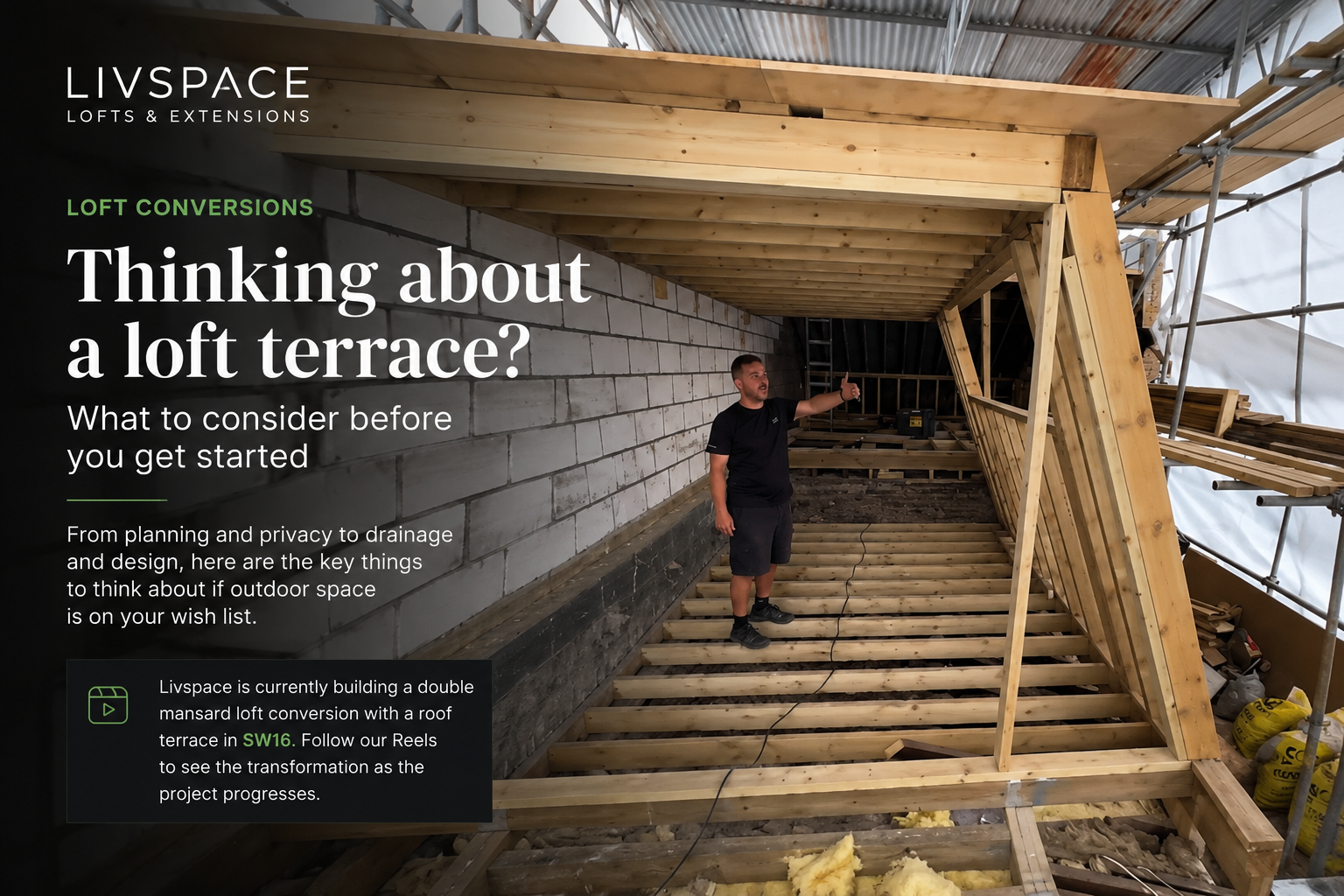
Nicky on-site at Livspace’s double-mansard with roof terrace project in SW16, June 2026
1. Think about insulation for summer as well as winter
Most people think of insulation as something that keeps heat in during the colder months. But good insulation also helps reduce heat gain in summer.
In a loft conversion, the roof is one of the biggest areas exposed to the sun. Without proper insulation, the space can quickly become uncomfortable in hot weather.
When planning your conversion, ask about the insulation specification, how it supports year-round comfort and whether the build-up is suitable for the way the room will be used.
A bedroom, office or children’s room needs to stay comfortable throughout the day and night, not just look good when the work is finished.
2. Choose glazing carefully
Natural light is one of the best things about a loft conversion. Rooflights, dormer windows and glazed doors can completely transform the space.
But more glass can also mean more solar gain, especially on south-facing or west-facing elevations. When planning your windows, think about:
Where the sun hits the property during the day.
Whether the room will be used for sleeping, working or relaxing.
How much direct sunlight the space will get.
If shading, blinds or specialist glazing should be included.
The goal is to create a bright, airy space without turning it into the hottest room in the house.
3. Plan for proper ventilation
Ventilation is one of the biggest factors in making a loft conversion feel comfortable in warmer weather.
Opening windows on opposite sides of the room, where possible, can help create airflow. Rooflights can also help release warm air, as heat naturally rises.
For some homes, it may also be worth considering mechanical ventilation, especially if the conversion includes a bathroom or en-suite.
Good ventilation helps the space feel fresher, reduces trapped heat, and supports the room's overall performance.
4. Consider shading from the start
Shading is much easier to plan before the conversion is complete than to add as an afterthought.
This could include integrated blinds for rooflights, curtains, shutters or external shading solutions where appropriate.
It is also worth thinking about how the room will feel at different times of day. A loft bedroom that catches the evening sun may look beautiful, but it also needs to cool down before bedtime.
Small decisions at the planning stage can make a big difference to everyday comfort.
5. Be realistic about how the space will be used
A loft conversion is not just extra square footage. It needs to work for real life.
If the room will be used as a home office, it needs to stay comfortable during the working day. If it is a bedroom, it needs to feel calm and cool enough for sleep. If it is a children’s room, safety, airflow and temperature control all matter.
Before finalising the design, think carefully about:
Who will use the room?
When will they use it?
How much storage is needed?
Does the space need an en-suite?
How will the room feel in both summer and winter?
The best loft conversions are designed around how the household actually lives.
6. Do not forget the roof terrace or balcony potential
Where planning allows, some loft conversions can include access to a terrace, Juliet balcony or outdoor space.
During warmer months, this can be a real bonus. It can bring in more light, create a stronger connection to the outside and make the new space feel even more special.
We are seeing this come together on our current double-mansard project in SW16, where the new loft space includes doors leading out to a roof terrace. With weather like this, it is easy to see how much potential that extra outdoor space can add.
However, outdoor access needs to be carefully designed. Privacy, safety, planning permission, overlooking, and drainage all need to be considered properly.
If outdoor access is on your wish list, raise it early so it can be incorporated into the planning and overall design.
You can follow the progress of our SW16 project over on our Reels.
7. Work with a team that understands the whole build
A loft conversion needs to balance design, structure, planning, insulation, ventilation, lighting, storage, and finish.
That is why it is important to work with a team that looks at the whole project, not just the extra space being created.
At Livspace Lofts & Extensions, we help homeowners plan loft conversions that feel practical, comfortable and built around the way they live. From early ideas through to the final finish, we look at how the new space will work throughout the year.
If you are thinking about a loft conversion, now is a great time to start planning ahead.
Get in touch with the Livspace team to talk through your ideas.